Should You Comply With a Profile Verification Request?
Platforms are asking you to verify your identity. A badge appears next to your name. It looks like a small thing. It is not a small thing. It is a data collection event dressed as a trust feature, and almost no one asks the governance question before agreeing to it: where does this go, who controls it after you hand it over, and what happens when the systems holding it fail.
Verification requests are spreading. Dating apps ask for it. Payment platforms ask for it. Employers ask for it through tools embedded in workplace login flows. LinkedIn is the clearest professional example, so it is worth walking through in detail, but the argument applies to any platform running the same play.
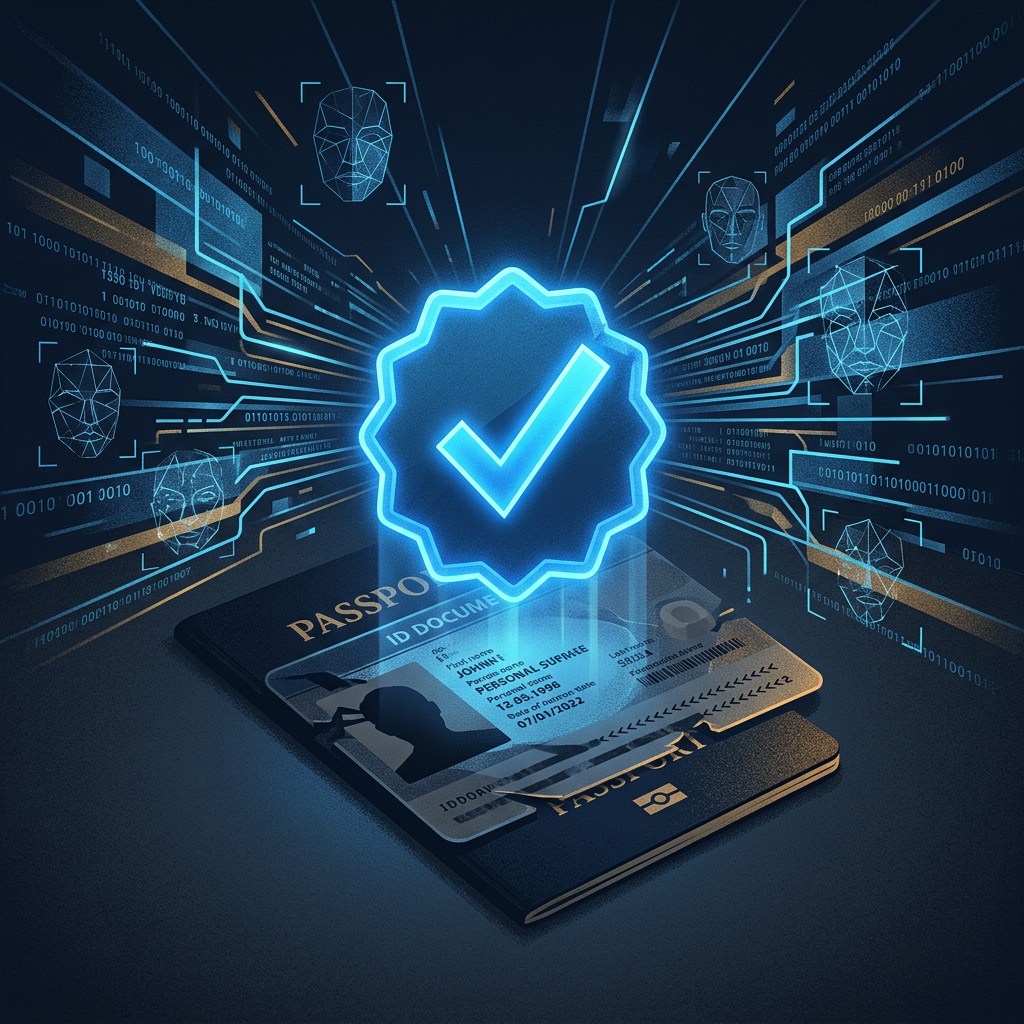
LinkedIn verification runs through CLEAR or Persona depending on your country. You photograph a government-issued ID, sometimes a passport with an embedded chip, and often submit a selfie so the system can match your face to the document. A separate account gets created for you with that vendor, whether or not you asked for one. LinkedIn says it does not receive your raw biometric data, and that is a meaningful distinction. But it means a company you did not choose and likely never heard of now holds your ID scan and your face print.
LinkedIn's stated rationale is fraud prevention. Fake profiles and online scams reportedly cost businesses roughly sixty billion dollars a year, and the company frames the badge as an authenticity signal that helps members make informed decisions. It also says plainly, as a selling point, that verified profiles see about sixty percent more profile views. That is worth sitting with. A fraud-prevention tool does not usually need a built-in visibility incentive to drive adoption. When a safety rationale and a growth rationale arrive in the same sentence, the growth rationale is usually doing more of the work. There is also a proportionality question no one asks out loud. A professional badge does not obviously require passport-level verification, the kind used to board a plane. A confirmed work email or phone number would address most of the actual fraud problem. Reaching for the strongest, most sensitive verification tool available because it is now cheap to plug in is a choice, not a necessity.
I am consistently surprised by how quickly people agree to this without asking a single question. I have been prompted to verify myself, and the request tends to resurface right after a post performs well, framed around more reach. If a platform implies that verification improves exposure, it is also implying that an unverified member is not treated as fully equal by whatever decides who gets seen. Whether that amounts to a real deprioritization is not something any member can check from outside the platform, and that opacity is the problem. A distribution mechanic serious enough to change who sees your work should not depend on a system no one is shown.
The real exposure was never LinkedIn's own servers. It sits with the vendor. A 2024 data broker breach exposed billions of Social Security records, the exact category of data verification was supposed to replace. In early 2026, an identity-verification vendor's database was found sitting unsecured online. A password can be reset after a breach. A face cannot. Once your ID and your face are linked in a compromised database, that exposure is permanent.
This risk is not limited to activists, though it is acute for them. Verification data becomes a durable input that anyone with purchasing power, subpoena power, or breach access can pull into a larger identity system later. U.S. immigration enforcement is one visible example: agencies have built cross-referenced identity systems using commercial data brokers specifically because buying data from a private company sidesteps the warrant requirements a direct government search would face. Sitting senators with oversight access have called this kind of buildout Orwellian, and that is not exaggeration. A police state does not need a formal declaration. It needs cheap, centralized identity resolution and a population that already handed over its face, one verification request at a time, to platforms that called it trust and safety. The same data is exactly what a stalker, an abusive ex-partner, a corporate blacklist compiler, or a foreign intelligence service profiling a dual national would want. Once identity resolution is centralized, it gets used by whoever can pay for access, not only by whoever built it.
What Safeguards Actually Exist
Some real safeguards exist. LinkedIn keeps raw biometric data out of its own systems. Consent is required before the vendor shares results. Verification is optional. But you can change your mind only partway. You can remove the badge anytime in Settings, and LinkedIn is clear that once removed it cannot be restored without redoing the whole process. What removing the badge does not do is delete the ID scan and face print sitting on the vendor's servers. That requires contacting CLEAR or Persona directly, and whether they act on it depends on which privacy law covers you. LinkedIn does commit to deleting data within fourteen days for a separate, narrower flow, verification used purely to recover a locked account. No equivalent deletion clock exists for the standing badge verification, the one actually holding your passport and your face.
Before agreeing to any of this, you are entitled to know who the actual vendor is, how long they retain your data, whether processing happens on your device or in a central database, whether that vendor has been breached before, and what your recovery path is if your biometric data leaks, since a password can be changed and a face cannot. If a platform cannot answer these questions in plain language before you submit an ID photo, that absence is the answer.
The Design Question Behind the Badge
This is not an argument against verification in principle. Fraud is real, and identity verification can help. It is an argument for systems that disclose before they ask for consent, that default to on-device processing over centralized storage, and that give a real answer for what happens when the vendor fails, before asking for a photo that cannot be taken back.
I am publishing this on the same platform it examines, aware that platforms have wide latitude to restrict accounts that scrutinize their own products. That is itself part of the argument. A system that can quietly penalize scrutiny of itself is not one with real accountability built in.
I don't think the answer is blanket refusal. I think the answer is refusing to treat the badge as neutral. It is a governance decision wearing a UI element. Treat it like one.
Maysa Hawwash, Founder and CEO, ScaleX

Maysa Hawwash
Founder & CEO, ScaleX
HR strategist and author of the Ethics by Design newsletter, helping organizations grow with integrity.
Put these ideas into practice
More in Ethics by Design

July 22, 2026
The Chart and the Layoff, Same Week
Xbox cut 3,200 jobs the same week Microsoft was celebrating record AI investment. The memo was unusually candid. What it got backward was the order. Sequencing choices are design choices, whether anyone treats them that way or not.

July 14, 2026
The Bill Always Arrives: What Capital Owes Ethics by Design
Warren Buffett redirected six billion dollars away from the Gates Foundation this week. The lesson is not about scandal. It is about the gap between philanthropic reputation and actual governance, and why that gap always closes eventually.
April 25, 2026
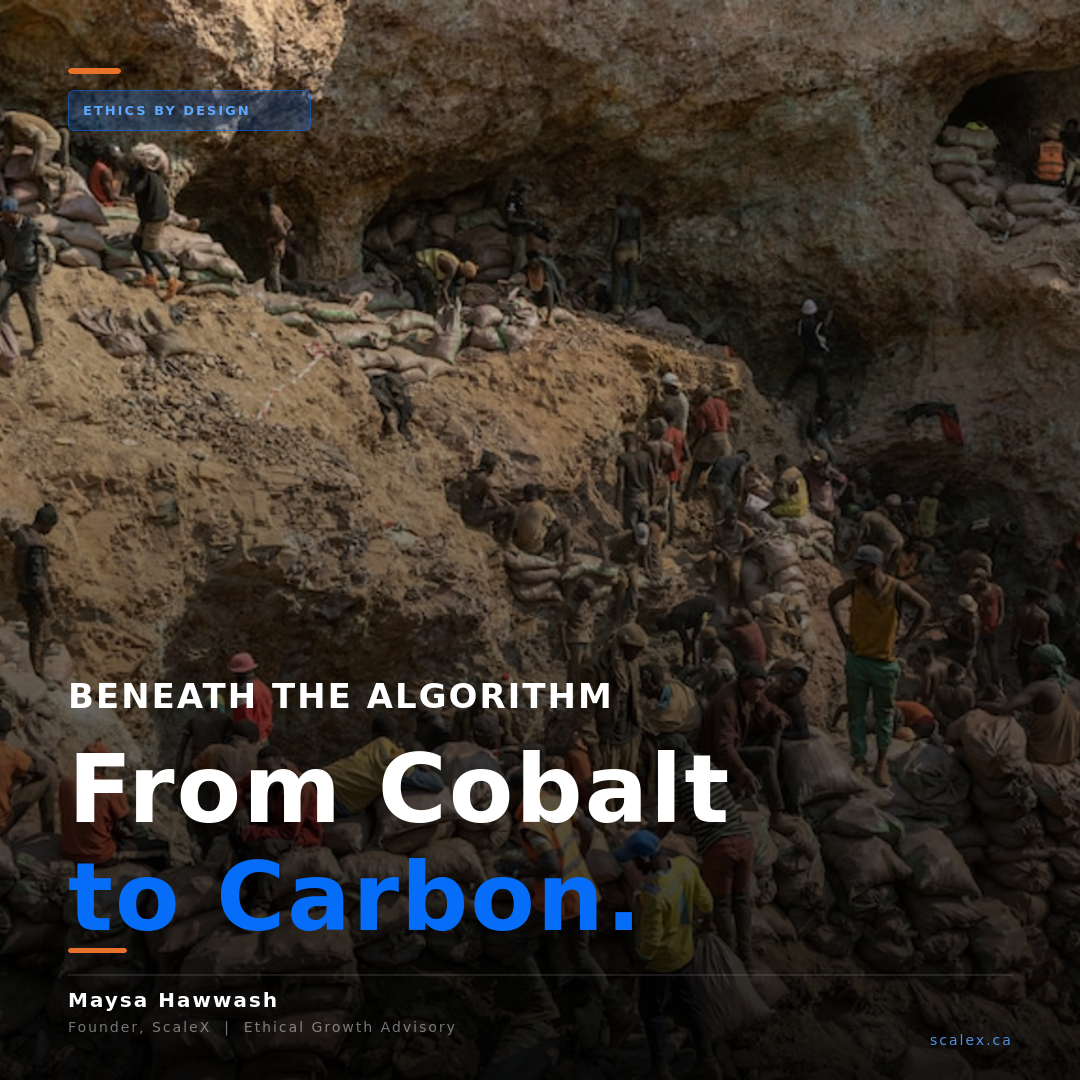
Beneath the Algorithm: From Cobalt to Carbon
The real ethical crisis in AI is not just in the code. It is in the ecosystem. The data center humming in Arizona is connected to the cobalt mine in the Congo, the e-waste landfill in Ghana, and the rising water table in Taiwan.