
Ethics Is Not a Principle. It's an Architecture.
Ethics Is Not a Principle. It's an Architecture.
Every organization deploying AI today is quietly redesigning its moral system, not through mission statements, but through workflows.
The real shift is not technological. It is architectural.
AI is not a tool layer. It is a decision layer. And decision layers are where power lives. When power grows without structure, harm follows.
We have seen this pattern before.
When companies rushed into the cloud, they ended up with shadow IT, fragile security, and compliance chaos. When they rushed data collection, they triggered privacy scandals, regulatory penalties, and public backlash. When they rushed automation, they created burnout systems, job erosion, and moral injury inside their workforces.
Now they are rushing AI.
And the pattern is repeating.
Only this time the stakes are higher, because AI does not just automate tasks. It reorganizes authority. It rewires incentives. It reshapes labor. It relocates responsibility. It creates new centers of power, dissolves old ones, and leaves accountability floating in the gaps.
Deploying AI is a governance event.
Cloud adoption taught us that infrastructure without control produces vulnerability. The data era taught us that collection without consent destroys trust. The automation wave taught us that efficiency without humanity emptied out organizations of their humanity.
The AI era is testing something deeper.
What happens when autonomous systems participate in decisions, but no one redesigns legitimacy around them?
This is where ethical debt is born.
Ethical debt accumulates when organizations take shortcuts in how they design power. Technical debt costs money. Ethical debt costs trust, credibility, and people.
It shows up in systems that claim meaningful human oversight when the human role is symbolic. In performance algorithms that quietly reward harm because the metric is easier than the truth. In hiring tools that reproduce bias under the mask of objectivity.
The most dangerous AI systems are not malicious.
They are unowned.
When outcomes belong to “the system.” When accountability dissolves across teams, vendors, and models. When oversight exists on paper but not in power.
Ethical failure stops being a risk. It becomes an inevitability.
Uber’s algorithmic management model is a clear warning.
Uber shows what can go wrong when algorithms replace human judgment without clear oversight. Its automated rating, dispatch, and pay systems controlled drivers through invisible rules, with no real way to appeal or understand decisions. That created stress, unpredictable income, and power imbalances that sparked strikes, lawsuits, and government scrutiny around the world. The issue was designing for efficiency without building accountability or legitimacy.
Which brings us to the real question organizations are avoiding.
What does a legitimate organization look like when machines participate in decision-making?
Because until that is answered by design, not by slogans, every AI deployment is quietly making the choice for you.

Maysa Hawwash
Founder & CEO, ScaleX
HR strategist and author of the Ethics by Design newsletter, helping organizations grow with integrity.
More in AI Governance
June 9, 2026
When Good Intentions Aren't Enough: The Governance Gap in Humanitarian AI
The humanitarian sector is deploying AI faster than it is building the governance to match. When the population you serve is in crisis, displaced, and undocumented, that lag is not a footnote. It is a failure.
May 28, 2026
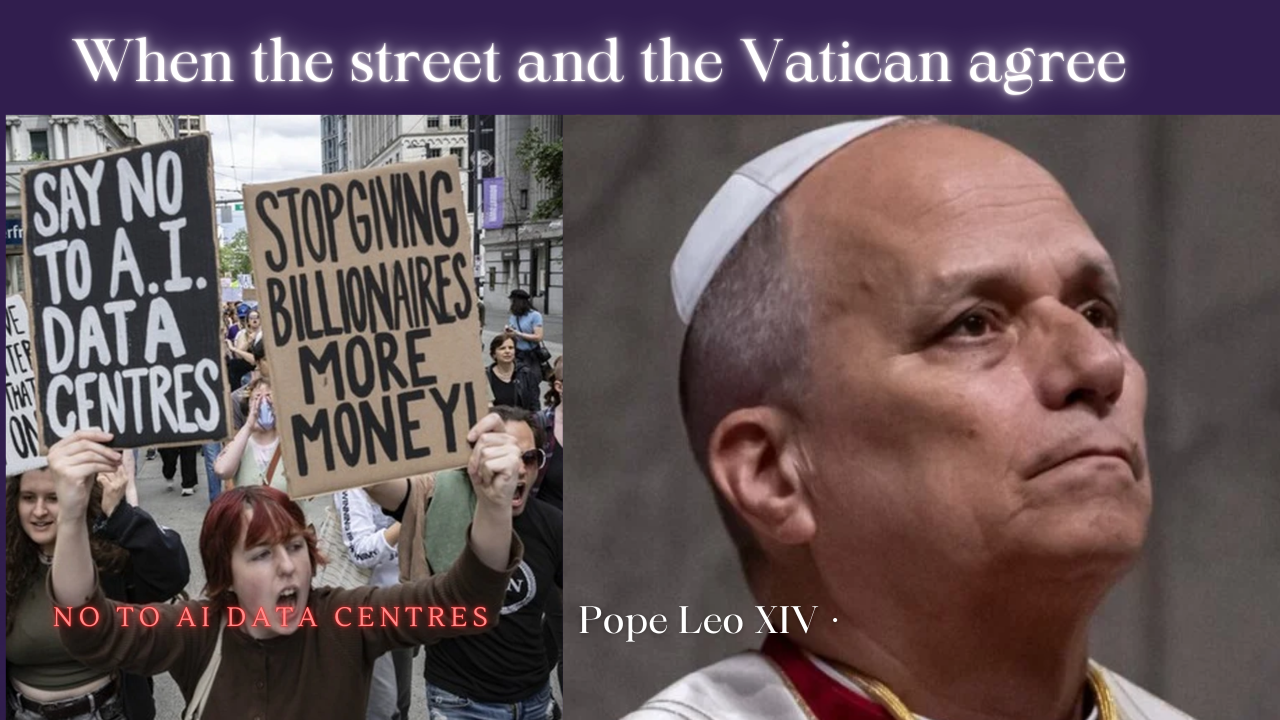
When the Pope and an 18-Year-Old Student Say the Same Thing at the Same Time
A university student in Vancouver and the Pope of the Catholic Church arrived at the same diagnosis of artificial intelligence in the same week. That is not a coincidence. It is a signal.

May 12, 2026
1.1 billion
On Workday, the EU AI Act, and the five things HR leaders need to do before August 2. The number is 1.1 billion: that's how many job applications Workday's court filings admit its software has rejected since September 2020.