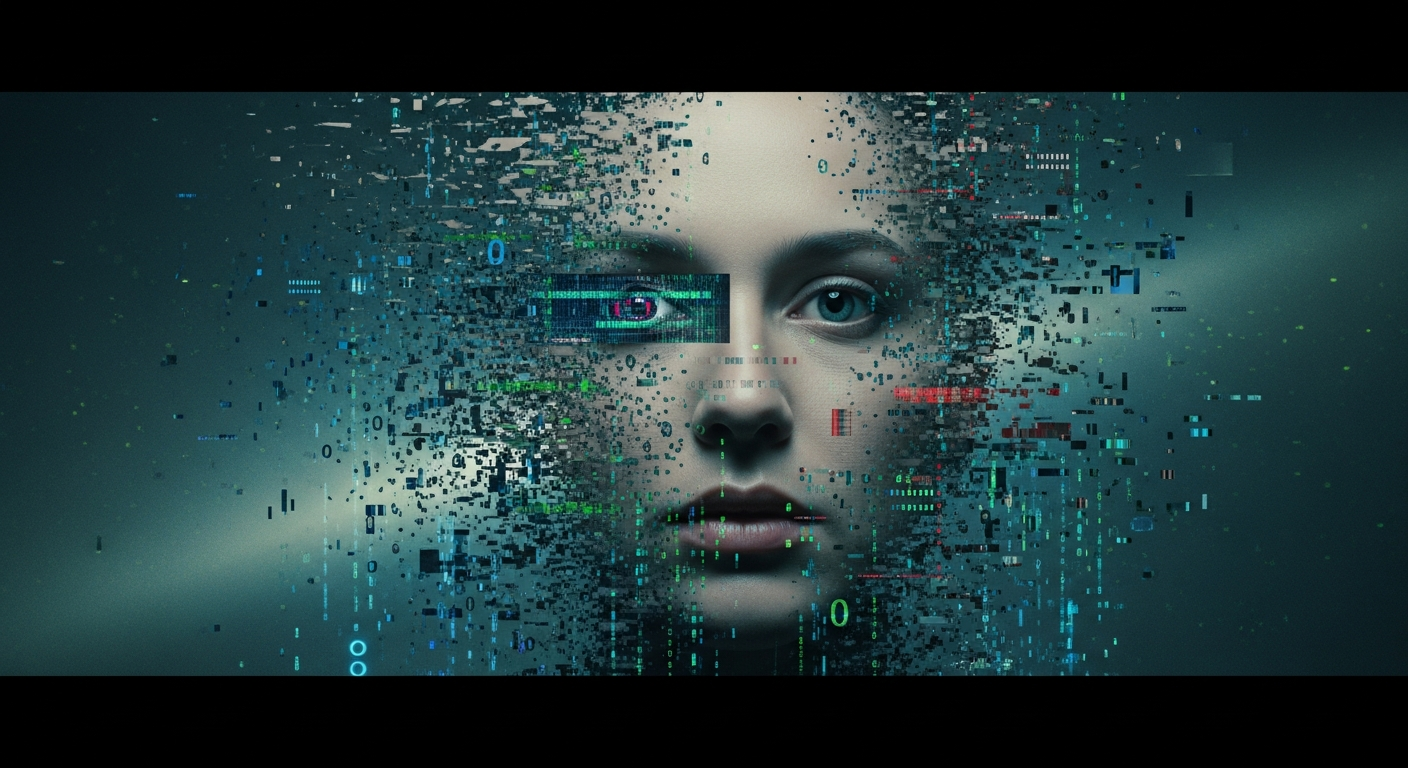
Deepfakes, Bots, and the End of a Common Reality
We used to argue about opinions. Now we argue about what’s real.
That’s a much bigger problem.
You scroll for five minutes, and you’re already in it. Videos that look real but aren’t. Voices that sound familiar but aren’t. Content engineered to feel true whether it is or not.
And here’s the part most people are underestimating: this isn’t slowing down. It’s accelerating.
The question isn’t whether AI-generated content is taking over. It already is.
The real question is whether we’re building the instincts and systems to survive it.
Research published in Forbes and The Conversation shows 71% of social media images are now synthetic. By 2030, machine-made content will dominate what we encounter online.
Our challenge is building systems that let us thrive anyway.
The Landscape
AI didn’t creep in quietly. It hit all at once.
A few years ago, synthetic content was a novelty. Now it’s baked into everything. Marketing, customer service, news cycles, political messaging. You’re not looking for AI anymore. You’re swimming in it.
Most people still think they can “spot it.” They can’t.
And businesses aren’t much better. Half of them are deploying AI aggressively while pretending the risks are theoretical. They’re not. They’re operational.
What’s changing isn’t just volume. It’s believability. The gap between real and synthetic is collapsing fast enough that instinct alone doesn’t hold up anymore.
We’re moving from a world where content was assumed real, to one where reality has to be proven.
That’s a fundamental shift.
Text content shows the most widespread adoption. 58% of all digital text now originates from AI systems. AI customer service handles 68% of inquiries without human intervention, generating 3.5 billion social impressions and attracting 52% new customers.
By 2028, 90% of all digital content will have AI components. The generative AI market hit $89.6 billion in 2026, more than quadrupling in two years.
Voice Cloning: The Scam That Built a Detection Industry
Sharon Brightwell, victim of an AI cloning spam. Photo: Fox 13 News
July 2025. A mother gets a call from her daughter.
She’s crying. Panicked. Says she hit someone. A lawyer gets on the line. Urgency. Pressure. Money needs to move now.
It felt real because it sounded real. It wasn’t.
It took less than a minute of scraped audio to clone her daughter’s voice. That’s it. No hacking. No sophistication. Just access and intent.
She paid $15,000.
That case didn’t just expose a scam. It exposed how fragile our assumptions are. We trust voices. We always have. That shortcut is gone now.
The response was fast. Banks tightened verification. Telecom companies pushed detection. Regulators stepped in.
All necessary. None of it replaces the one thing that would have stopped it instantly: pause, hang up, call back on a known number.
Technology failed. Human instinct, if activated, would have worked. The $25 Million Video Call That Changed Corporate Security
The $25 Million Video Call That Changed Corporate Security
Illustration of deepfake video manipulation. Photo: Fortune/Getty Images
2024. Hong Kong. An Arup engineering employee joins a video call with senior colleagues. Every face looks right. Every voice sounds authentic. The instruction: transfer funds immediately.
The employee wires $25 million to deepfake executives, confirmed by the Financial Times and Fortune.
Arup did not just absorb the loss. They partnered with biometric verification startups to develop "liveness checks" for video calls, micro challenges that deepfakes cannot pass. Within months, Fortune 500 companies adopted the standard.
Deloitte Center for Financial Services found that more than 40% of financial professionals have directly encountered deepfakes used in fraud attempts. 90% of survey respondents report fraudsters are actively using generative AI in their operations. Today, 68% of multinational corporations use multi-factor video verification for wire transfers over $50,000.
The $6 Million Robocall
President Biden during the 2024 New Hampshire primary. Photo: NBC News
January 2024. New Hampshire voters receive calls from "President Biden" telling them to skip the primary. The voice was cloned. The FCC fined the perpetrator $6 million.
The incident forced the rapid deployment of call authentication protocols that now verify caller identity across major networks. Election officials in 12 states now use AI detection tools to screen campaign communications. The attack failed in its goal. Voter turnout held steady. The incident left behind a stronger verification infrastructure than existed before.
The broader impact: Research by DeepStrike found 46% of cybersecurity leaders now rank "advance of adversarial capabilities," including phishing, malware development, and deepfakes, as their top AI concern. Yet a dangerous confidence gap persists: Eftsure's 2025 survey revealed that 31% of business leaders believe deepfakes have not increased their fraud risk, while Security.org found 80% of companies lack established protocols for deepfake attacks. The robocall incident exposed both the regulatory momentum and the lingering unpreparedness in corporate America.
The Zelenskyy Surrender Video That Proved Rapid Response Works
Early in the Ukraine conflict, a fake video of Volodymyr Zelenskyy telling troops to surrender circulated widely. Millions saw it. Official Ukrainian channels debunked it within 90 minutes using pre-established verification protocols, cryptographic signatures on official communications, rapid response digital forensics teams, and cross-platform alert systems.
Deepfakes spread fast, but institutional verification can spread faster when systems are pre-built.
The Missing Muscle: Why Common Sense Is Your Best Defense
Everyone is looking for a technical solution.
Better detection. Better tools. Better regulation.
All of that matters. None of it is enough.
The most reliable defense we have right now is still human judgment. And most people are out of practice.
Deepfakes don’t work because they’re perfect. They work because they create pressure. Urgency. Fear. Authority. Just enough to shut down critical thinking.
The people who don’t fall for this aren’t smarter. They just slow down. They ask one extra question. They break the script.
“Call me back.” “Send this through the usual channel.” “Why would this be happening this way?”
That moment of friction is everything.
The antidote is remarkably simple:
Organizations now train staff in "cognitive friction," mandatory 30-second pauses before any financial action triggered by unsolicited contact. The delay feels annoying. Keepnet Labs reports it has also prevented $400 million in fraud attempts across major banks since 2024.
Skepticism as Competitive Advantage
The companies getting this right aren’t the ones with the best AI.
They’re the ones building verification into how they operate.
Not as compliance. As muscle.
They assume things can be faked. They design around it. They normalize double-checking, even when it feels unnecessary.
And here’s the interesting part: customers notice.
Trust is becoming a differentiator again. Not branding. Not messaging. Actual, operational trust.
If I know your systems protect me from fraud, I stay. If I feel like you’re guessing, I leave.
Most companies are still treating this like a cybersecurity issue.
It’s not.
It’s a trust infrastructure problem.
The Verification Stack
Smart organizations layer human judgment with technical tools:
- Technical verification: AI detection, metadata analysis, blockchain provenance
- Procedural verification: Callback protocols, multi-channel confirmation, and cooling-off periods
- Cultural verification: Staff trained to question, rewards for catching fakes, no penalty for "false alarms."
The third layer is the hardest to build and the most valuable. A bank can buy detection software. It cannot buy a workforce that feels permission to question authority when something feels off.
Critical Thinking as Curriculum
The most resilient societies treat critical thinking as infrastructure, not electives.
What Works in Education
Finland's "Media Literacy 2.0" program (grades 1-9): Students learn to identify emotional manipulation, check image provenance, and recognize bot behavior. By age 14, 89% correctly identify synthetic political content in testing, compared to 34% in countries without such programs.
Singapore's "Verify First" campaign: Public libraries offer free digital verification workshops for seniors, the most targeted demographic for voice cloning. Participants report 67% fewer scam attempts six months post-training.
Corporate "Red Team" exercises: Companies like Microsoft and Google now run internal drills where employees must spot deepfake "executives" requesting sensitive data. Failure is celebrated as learning. Success is rewarded. Skepticism becomes culture.
The Five Habits of Verified Minds
Organizations and schools are teaching specific behaviors:
- Source triangulation: Can I find this same information from three independent sources?
- Emotional audit: Am I reacting to content, or to how the content makes me feel?
- Technical spot checks: Do shadows match light sources? Does audio sync with lip movement? Free tools like RealityCheck and TruePic make this accessible.
- Authority verification: Can I contact this person through a known channel, not the one provided?
- The 24-hour rule: For any consequential decision based on digital content, wait. Sleep on it. Deepfakes age poorly; truth persists.
Research published in Nature shows people think an AI-generated voice sounds the same as a real voice 80% of the time, but training improves detection significantly. The skill is learnable.
Recovery Stories
The Teacher Who Fought Back and Won
May 2024. Cheryl Bennett, a 27 year old UK teacher, was targeted with a faked audio clip of her uttering a racial slur. Death threats followed. Her career seemed over.
Bennett sued. She won the UK's first legal settlement for political deepfake harassment, establishing precedent. She became an advocate for "digital dignity" laws now advancing in Parliament. The attack was intended to silence her. Instead, it gave her a platform to strengthen protections for others.
The video still exists online. So does the legal framework that makes such attacks costlier to launch.
The Michigan Tornadoes: Community Defense Against Synthetic Chaos
Aerial view of tornado damage in Three Rivers, Michigan. Photo: MLive
March 6, 2026. Deadly tornadoes tear through Three Rivers, Michigan. Within one hour of touchdown, AI-generated images and videos flood Facebook. Fictional destruction. Fake victims. Synthetic devastation presented as real.
The community response: Local officials had pre-established verification channels, text alerts, verified Twitter lists, neighborhood apps with pre-authenticated sources. Residents learned to cross-reference claims across three independent sources before sharing. Fact-checking networks, activated within 20 minutes, labeled synthetic content before it reached viral velocity.
Western Michigan Professor Sue Ellen Christian notes, "Communities that build verification habits before crises hit recover faster. Three Rivers had practiced. They were ready."
The AI content spread. Real information reached victims faster than in comparable disasters five years prior. The synthetic noise did not win. It accelerated the adoption of resilient information systems.
The Content Moderation Acceleration
January 2024. Non-consensual explicit AI images of Taylor Swift went viral. Millions saw them before platforms reacted, according to NPR and Graphika research.
The incident forced major platform overhauls. X temporarily blocked searches to contain the spread, admittedly blunt, but precedent-setting. More importantly, the incident catalyzed the "Take It Down" Act in the U.S., requiring platforms to remove non-consensual intimate imagery within 48 hours of notice.
The Constructive Forces
Northwestern Engineering deepfake detection system. Photo: Northwestern University
The Verification Economy
Deepfakes created a $4.2 billion market in detection and authentication technology. Startups like Reality Defender and Truepic provide real time content verification used by newsrooms, banks, and election officials. Blockchain provenance systems now track image authenticity from camera to publication.
Keepnet Labs reports the number of deepfake files will hit 8 million by the end of 2025, a 1,500% increase from 2023, but detection capabilities have scaled proportionally.
The shift: We moved from trusting by default to verifying by design. That friction protects us.
The EU AI Act mandates transparency for AI-generated content, not banning synthesis, but requiring labels. 12 U.S. states now have deepfake disclosure laws for political content. California's "digital dignity" statute allows victims to sue for synthetic harassment.
Regulation is not perfect. The legal system is adapting faster than it did for internet privacy or social media liability.
The Bot Hunters: Reuters reported fake election accounts proliferating on X in May 2024. The U.S. Justice Department disrupted Russian AI-enhanced influence operations in July 2024. Meta caught Chinese fake account networks.
The positive reading: Detection capabilities have outpaced bot sophistication in 2024-2025. The median lifespan of a state sponsored fake account dropped from 180 days to 23 days between 2022 and 2025.
The Path Forward: Practical Resilience
For Individuals: Your Skepticism Toolkit
- Pause before emotional reactions. If content makes you furious or terrified, that is the manipulation working. Breathe. Verify.
- Cross-reference everything consequential. One source is a rumor. Two is a coincidence. Three independent sources is information.
- Use free verification tools. RealityCheck, TruePic, and browser extensions like SurfSafe flag synthetic content in real time.
- Cultivate "productive paranoia." Assume unexpected requests are synthetic until verified through known channels. The 30 seconds you spend calling back saves hours of damage control.
For Organizations: Ethics as Infrastructure
- Label everything. The EU AI Act sets the floor; exceed it. Transparency builds trust faster than secrecy builds advantage.
- Human in the loop for consequential decisions. When Sharon Brightwell's "daughter" called, callback verification would have stopped the loss. Simple protocols save millions.
- Train skepticism as a culture. Reward employees who question anomalies. No penalties for "false alarms," only for failures to verify.
- Audit for bias like revenue. Diverse teams catch manipulation patterns that homogeneous groups miss.
For Society: Building Immune Systems
- Media literacy as a core curriculum. Students learning to verify sources at age 10 become voters who demand accountability at 30.
- Independent verification networks. Blockchain provenance, open source detection, fact-checking operations firewalled from corporate capture.
- Public interest research. Ethical AI design funded and owned by the public, not locked in proprietary black boxes.
- Democratic technology governance. Citizens at the table, antitrust with teeth, human rights prioritized over quarterly earnings.
The Real Competitive Advantage
We’re not going back to a world where content is naturally trustworthy.
That’s over.
What replaces it could be better if we get it right. Not blind trust. Earned trust. Verified trust.
The systems are being built in real time. Detection tools, legal frameworks, verification protocols. Some of them will work. Some won’t.
But none of it matters if people don’t adapt.
The edge in this next phase won’t come from producing more content. Everyone can do that now.
It will come from knowing what to trust, when to question, and how to verify before acting.
That’s not a technical skill.
It’s a survival skill.

Maysa Hawwash
Founder & CEO, ScaleX
HR strategist and author of the Ethics by Design newsletter, helping organizations grow with integrity.
More in Ethics by Design

August 4, 2026
Should You Comply With a Profile Verification Request?
Platforms are asking you to verify your identity. A badge appears next to your name. It looks like a small thing. It is not a small thing. It is a data collection event dressed as a trust feature, and almost no one asks the governance question before agreeing to it.

July 22, 2026
The Chart and the Layoff, Same Week
Xbox cut 3,200 jobs the same week Microsoft was celebrating record AI investment. The memo was unusually candid. What it got backward was the order. Sequencing choices are design choices, whether anyone treats them that way or not.

July 14, 2026
The Bill Always Arrives: What Capital Owes Ethics by Design
Warren Buffett redirected six billion dollars away from the Gates Foundation this week. The lesson is not about scandal. It is about the gap between philanthropic reputation and actual governance, and why that gap always closes eventually.